Find Us
Online Store
Ships throughout Malaysia
Pop-up Events
Locations announced on Instagram
Work Hours
Monday to Friday: 10AM - 8PM
Weekend: 10AM - 8PM
Find Us
Online Store
Ships throughout Malaysia
Pop-up Events
Locations announced on Instagram
Work Hours
Monday to Friday: 10AM - 8PM
Weekend: 10AM - 8PM
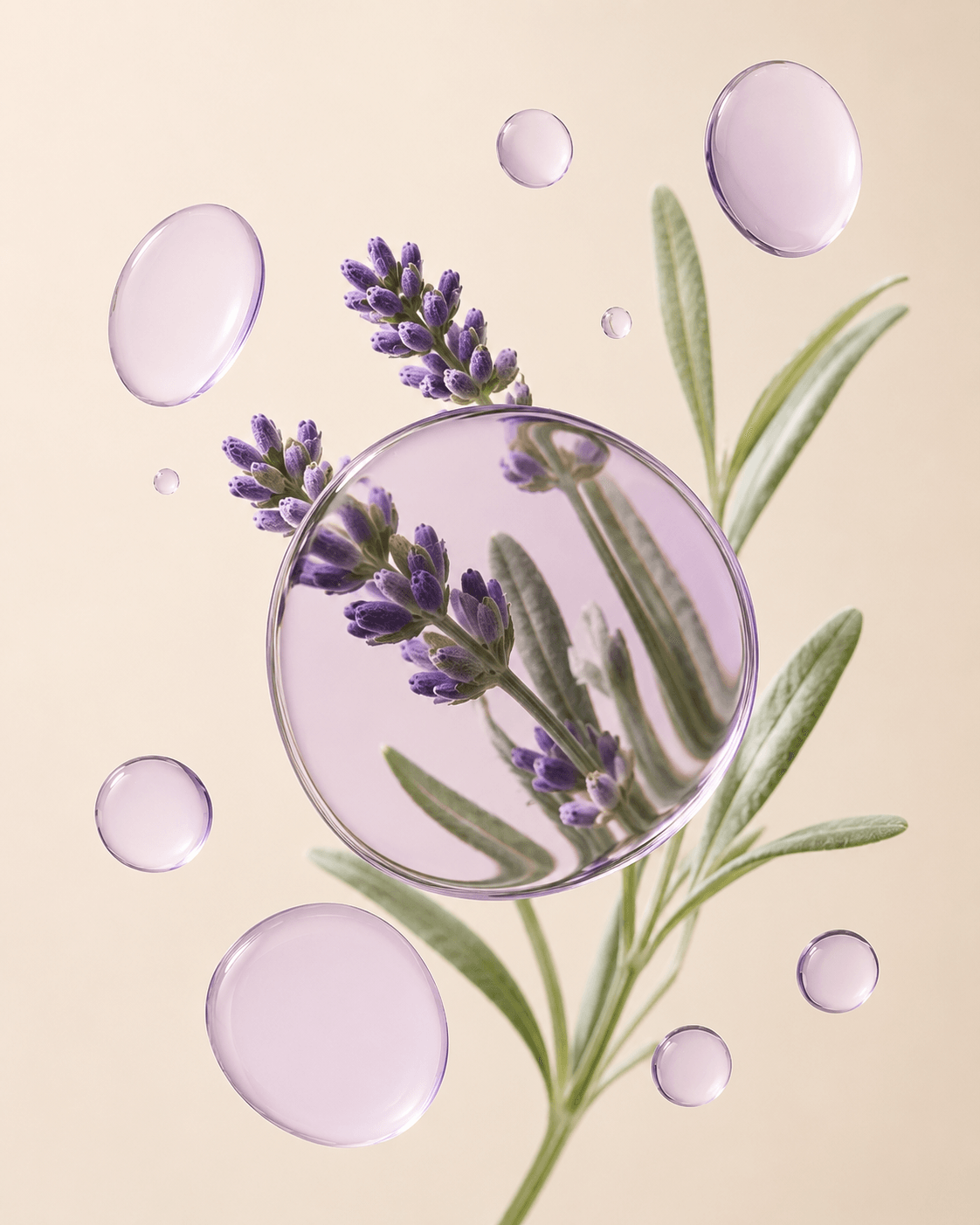
There is a good chance you have smelled lavender hundreds of times.
In freshly laundered towels. Hotel toiletries. Candles. Household cleaners. Even skincare products that promise a sense of calm.
Yet surprisingly, many of us have spent far more time smelling interpretations of lavender than the flower itself.
Modern perfumery has become remarkably skilled at recreating familiar aromas. Synthetic scent molecules can capture what we recognise as lavender with impressive consistency, allowing every bottle to smell almost identical to the last. It is an extraordinary achievement, and one that has shaped the way most of us think lavender should smell.
The first encounter with real lavender essential oil can therefore be unexpectedly different.
Not because it smells stronger, but because it feels less predictable.
The lavender found in everyday products is often designed around familiarity.
It is clean, recognisable and dependable. Whether it appears in fabric softener, soap or perfume, the goal is usually the same: to create the comforting impression that people have come to associate with lavender.
Real lavender has never been quite so simple.
Walk through a lavender field or rub the flowering stems between your fingers and you may notice something greener, softer and more textured than expected. There are gentle herbal notes, subtle sweetness and earthy nuances that rarely appear all at once. The scent feels alive because the plant itself is alive.
That difference is not imagination. It begins with how lavender is naturally composed.
Unlike a synthetic interpretation, lavender essential oil is not built around one or two ingredients.
It naturally contains well over a hundred aromatic compounds. Among the best known are linalool and linalyl acetate, accompanied by dozens of smaller constituents that quietly shape the scent’s character. None of them tells the whole story on its own. Together, they create the distinctive aroma we recognise as real lavender.
Synthetic lavender often takes a different approach.
Rather than reproducing the plant’s complete aromatic profile, it recreates the familiar impression of lavender that most people expect. The result can be beautifully clean and remarkably consistent, but it is usually a simplified interpretation rather than the full complexity found in nature.
That is why two perfumes can both smell unmistakably of lavender at first, yet feel surprisingly different after a few minutes on the skin.
Our relationship with scent is shaped as much by memory as by chemistry.
For many people, lavender is connected to moments of comfort long before they ever encounter the plant itself. Freshly washed sheets, a favourite soap, a quiet hotel room or evenings at home all become part of the story. Over time, the mind begins to associate that familiar aroma with those experiences.
When you smell lavender again, those memories often arrive before you consciously recognise the scent itself.
Real lavender essential oil adds another layer to that experience. Because its natural composition continues to reveal different facets over time, it often feels richer and more nuanced than the simplified lavender profile many of us have grown up with.
This is one of the quiet pleasures of essential oil perfume.
Rather than remaining exactly the same from the first spray to the last, it changes gently throughout the day. Warm skin, fresh air and movement all influence how different aromatic compounds come forward while others gradually soften into the background.
The experience is subtle rather than dramatic.
You may catch a brighter citrus note in the morning, notice gentle florals by midday and discover a softer woody character as evening approaches. The perfume becomes something you continue to notice rather than something that simply fades away.
It feels less like wearing a fixed scent and more like accompanying something that quietly evolves alongside you.
Synthetic perfumery has transformed the fragrance industry through creativity, precision and consistency. It deserves that recognition.
Essential oil perfume simply offers a different experience.
Instead of presenting the same impression from beginning to end, it carries the naturally complex character of flowers, leaves, bark and roots. Tiny variations become part of the perfume’s personality, allowing it to feel more expressive without ever becoming overwhelming.
For us, this is the enduring appeal of perfume made with real essential oils.
Not because it promises something extraordinary.
But because it never feels entirely still.
Like nature itself, it continues to change in quiet and unexpected ways, inviting you to notice something new each time you return to it.